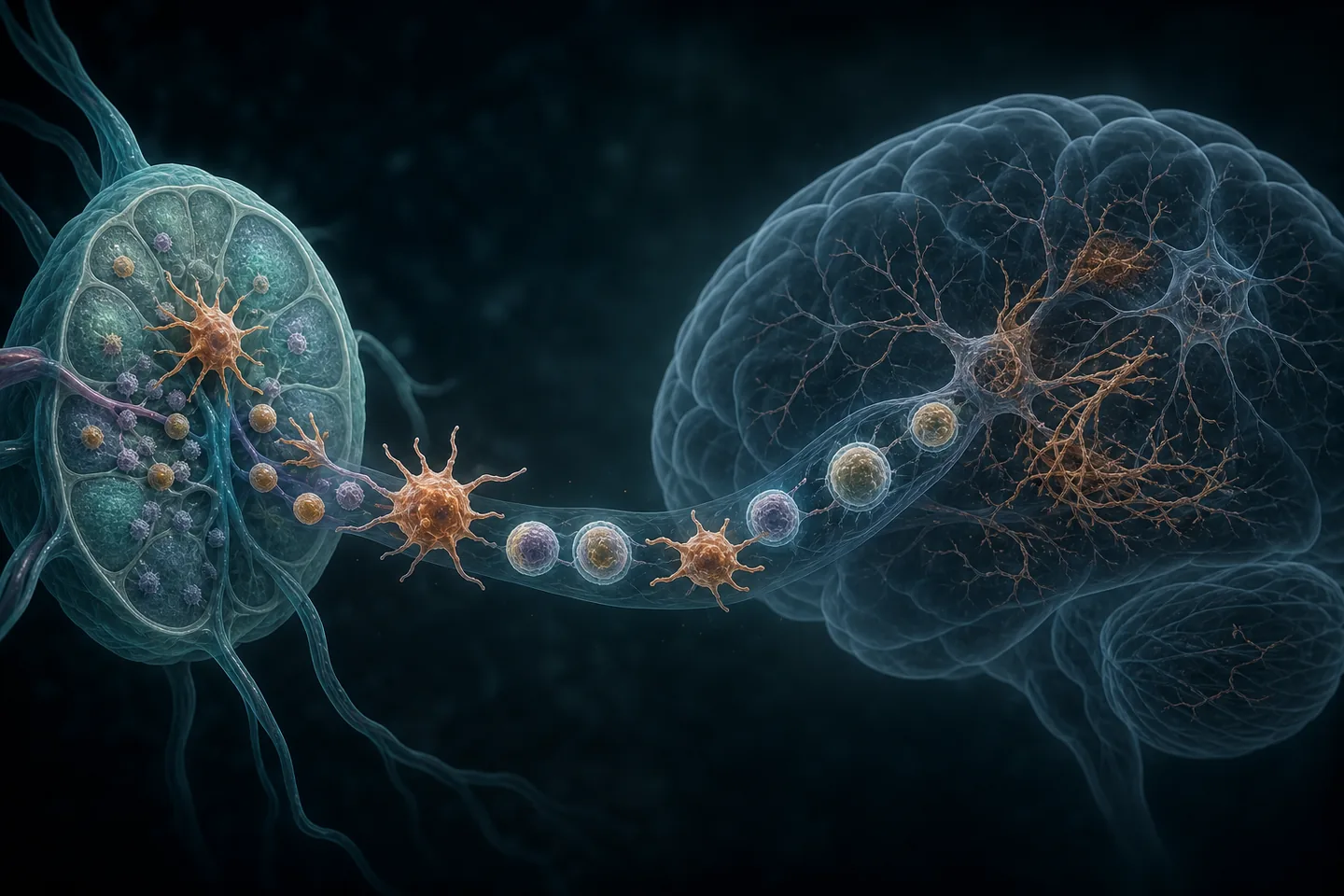
Cytotoxic CD8 T cells accumulate in the brain in Alzheimer's disease and other tauopathies, but where they receive the signal to attack has remained unclear. A Washington University-led team showed in a mouse model carrying human APOE4 and pathological tau that an important part of this response begins in peripheral lymphoid tissues.
Conventional type 1 dendritic cells presented brain-derived antigens there and primed CD8 T cells. When the researchers genetically removed those dendritic cells or disabled their antigen cross-presentation, fewer CD8 T cells entered the brain, glial activation fell, and the hippocampus, neurons and some behavioural measures were better preserved.
Human post-mortem samples from several primary tauopathies also contained more CD8 T cells, but that supports an association rather than the complete mechanism or an intervention effect. The specific brain antigen remains unknown, and genetic blockade in mice is not equivalent to a safe, feasible therapy.
A possible application is a more selective way to interrupt pathological signalling between lymph nodes and the brain without broadly suppressing immunity. The mechanism must first be replicated in other models, with the antigen, timing and safety established. Targeted preclinical candidates could emerge in 3–7 years; this study cannot support a clinical treatment timeline.



Be the first to open the discussion.